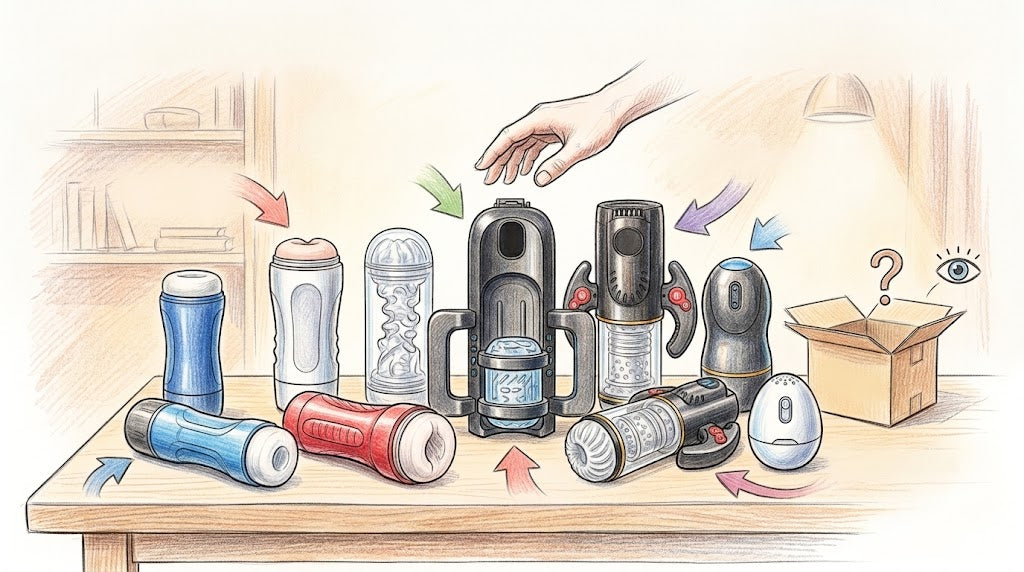
What is a male masturbator?
A male stroker is a sleeve-style sex toy designed to wrap around the penis and stimulate it through texture, pressure, and in some models, vibration. Unlike your hand, a well-designed sleeve makes contact along the full length of the shaft and reaches sensitivity zones that hands simply can’t replicate. For first-timers, a male masturbator does more than feel good. It builds awareness of your pleasure points, can help reduce premature ejaculation, and often improves partnered sex as a result.
Types of masturbators
There are several types:
- Manual strokers: handheld strokers you control yourself. Great for first-timers.

-
Vibrating strokers: like the Xmperor 2-in-1 Male Masturbator EnduraPlay X9, which features powerful vibration to help you map exactly where on your shaft sensation is strongest.

-
Automatic masturbators: like the Xmperor Freehand Masturbator Gokipa, which offers a completely hands-free stroking experience for ultimate relaxation.

-
Simulation masturbators: like the Xmperor Rotating Masturbator Flyveus, which mimics the twisting and gripping motions of intercourse.

How to prepare for your first session
Preparation is what separates an awkward first session from a genuinely good one. Take five minutes to get it right.
- Choose the right toy. For a first time, a vibrating stroker like the EnduraPlay X9 gives you the most feedback on your body. If you want simplicity, a manual sleeve is fine. If you’re ready for hands-free, the Flyvues is the most advanced option.
- Use water-based lube. It’s essential. Apply a generous amount to yourself and to the inside of the sleeve before you start. Silicone-based lube damages most toy materials, always stick to water-based.
- Set the mood. Privacy, a comfortable temperature, no time pressure. First-time sessions benefit from having space to explore without rushing.
-
Warm the sleeve. For enhanced realism, consider the Xmperor Heating Male Masturbator LAVA which warms itself.

Otherwise, soak a regular sleeve in warm (not hot) water for a minute or two before use. It creates a far more lifelike sensation and makes the experience easier to adjust to.
How to use a male masturbator step by step
There is no perfect technique. The goal of your first session is exploration, not performance. Here’s how to approach it:
- Get aroused first. Use porn, fantasy, or whatever works for you. Trying to use a toy from a standing start is harder than it needs to be.
- Apply lube. To yourself and inside the sleeve. Be generous. More than feels necessary is usually the right amount.
- Insert slowly. Let your body adjust to the new sensation. The texture and pressure feel different from a hand, give yourself a moment.
- Experiment with rhythm and pressure. Try slow strokes, then faster ones. Try a twisting motion. Vary the grip. There is no single right way to do it.
- Find your pressure points. Where along the shaft does sensation feel strongest? Toys with focused vibration, like the EnduraPlay X9, stimulate different sections of the shaft, making it easier to map your most responsive zones.
- Take your time. Don’t rush toward orgasm. The more you explore, the more you learn about what works for your body.
Tips & Common mistakes
A few things that make a real difference:
- Use more lube than feels normal. Top up halfway through if needed.
- Try different positions, lying down, standing, kneeling, sitting on the edge of a bed. Sensation changes noticeably depending on angle.
- Pair the toy with audio or video for the first few sessions. It makes the adjustment period much easier.
- Clean the toy after every single use. Rinse, use a body-safe toy cleaner, air-dry fully.
Common first-time mistakes:
- Rushing: The first session is about learning, not performing. Go slow.
- Wrong lube: Silicone lube on a silicone sleeve = permanent damage. Water-based only.
- Skipping clean-up: Bacteria and material breakdown happen fast without a rinse-and-dry. Don’t skip it.
Where is the Male G-Spot? Here's Exactly How to Find it
Grower vs. Shower: What’s the Difference, Which Is Normal & How to Measure